

This page will be updated with specific roles as they become available.
Want to make a difference in sustainability?
Available Positions
Senior Analyst/Associate
Senior Analyst/Associate
About Cyan Ventures
Cyan Ventures is a specialist sustainability firm that aims to accelerate the transition to a low carbon, green economy. We aim to make 20 years progress on the sustainability transition in less than 10 years. We provide advisory and project incubation services to first of a kind projects and climate markets. Examples of our work include conducting a feasibility assessment to incubate and build a sustainable aviation fuels facility, supporting clean energy start-ups to commercialise their business models and technologies, developing the climate risk strategy for a large Aussie corporate operating globally.
The firm boasts an elite inter-disciplinary team of strategists, project developers, and researchers – led by Dr. Fraser Thompson, co-founder of Sun Cable and ex-McKinsey and Shaun Chau, ex-BCG and former lead of Accenture Australia’s sustainability practice.
Open roles: Senior Business Analysts and Associates
The Cyan Ventures team is growing and we are looking to hire at all levels including:
- Senior Analysts: We are looking for passionate graduates, or early-career professionals with up to two years’ experience to join the team and work with us to provide advisory and project incubation services.
- Associates: Professionals with proven experience leading workstreams in consulting, investment, project development or climate/energy sectors, including financial modelling, due diligence and stakeholder engagement.
The role will be based in Sydney or Melbourne with hybrid work arrangements available.
About the role
If you worked here over the last 6 months, you might have:
- Developed a financial model and built out the commercial strategy for our biofuels project
- Worked with the top 15 industrial decarbonisation projects in Australia on how to resolve key issues associated with industrial off-take
- Supported the development of our new Green Fuels Accelerator which will work with a range of low carbon liquid fuels projects to accelerate biofuels in Australia
- Wrote the Information Memorandum for a promising second generation Virtual Power Plant
- Developed the investment presentation for a project to develop a polysilicon plant in Australia
- Partnered with a university to assess the impact of new clean energy and recycling technologies by thinking through commercialisation strategies
- Worked with a major NGO to assess biodiversity funding in Australia, estimate key finding gaps and develop a strategy to increase investment.
Who we are looking for
- Any academic discipline, including engineering, economics, environmental science, finance/commerce, public policy, or data science (including undergraduate, Masters and PhD levels)
- Passion for sustainability and desire to work on “big bets” in sustainability;
- Intellectual curiosity that translates towards an eagerness to solve complex problems, proven by research, academic or other extracurricular activities;
- Highly developed empathy and interpersonal skills and a strong drive to contribute to making the world a better place;
- Entrepreneurial attitude; and
- A positive and friendly attitude, alongside intellectual rigor and open-mindedness to face problems from new perspectives.
Research shows that diverse individuals tend to hesitate when applying for roles if they don’t meet every requirement. If you are interested in this role and possess some of the above attributes, we encourage you to apply and demonstrate your potential.
Engagement Manager/Principal
Engagement Manager/Principal
About Cyan Ventures
Cyan Ventures is a specialist sustainability firm that aims to accelerate the transition to a low carbon, green economy. We aim to make 20 years progress on the sustainability transition in less than 10 years. We provide advisory and project incubation services to first of a kind projects and climate markets. Examples of our work include conducting a feasibility assessment to incubate and build a sustainable aviation fuels facility, supporting clean energy start-ups to commercialise their business models and technologies, developing the climate risk strategy for a large Aussie corporate operating globally.
The firm boasts an elite inter-disciplinary team of strategists, project developers, and researchers – led by Dr. Fraser Thompson, co-founder of Sun Cable and ex-McKinsey and Shaun Chau, ex-BCG and former lead of Accenture Australia’s sustainability practice.
Open roles: Engagement Managers and Principals
The Cyan Ventures team is growing and we are looking to hire for an engagement manager/principal with 5+ years of experience:
- Engagement Manager/Principal: Senior professionals (5+ years of experience) with a track record of executing or advising on complex projects, strategies or transactions in energy or climate markets, and experience managing teams and senior stakeholders.
The role will be based in Melbourne (preferred) and/or Sydney
About the role
If you worked here over the last 6 months, you might have:
- Developed a financial model and built out the commercial strategy for our biofuels project
- Worked with the top 15 industrial decarbonisation projects in Australia on how to resolve key issues associated with industrial off-take
- Supported the development of our new Green Fuels Accelerator which will work with a range of low carbon liquid fuels projects to accelerate biofuels in Australia
- Wrote the Information Memorandum for a promising second generation Virtual Power Plant
- Developed the investment presentation for a project to develop a polysilicon plant in Australia
- Partnered with a university to assess the impact of new clean energy and recycling technologies by thinking through commercialisation strategies
- Worked with a major NGO to assess biodiversity funding in Australia, estimate key finding gaps and develop a strategy to increase investment.
Who we are looking for
- Any academic discipline, including engineering, economics, environmental science, finance/commerce, public policy, or data science (including undergraduate, Masters and PhD levels)
- Passion for sustainability and desire to work on “big bets” in sustainability;
- Intellectual curiosity that translates towards an eagerness to solve complex problems, proven by research, academic or other extracurricular activities;
- Highly developed empathy and interpersonal skills and a strong drive to contribute to making the world a better place;
- Entrepreneurial attitude; and
- A positive and friendly attitude, alongside intellectual rigor and open-mindedness to face problems from new perspectives.
Research shows that diverse individuals tend to hesitate when applying for roles if they don’t meet every requirement. If you are interested in this role and possess some of the above attributes, we encourage you to apply and demonstrate your potential.
Meet some of our team
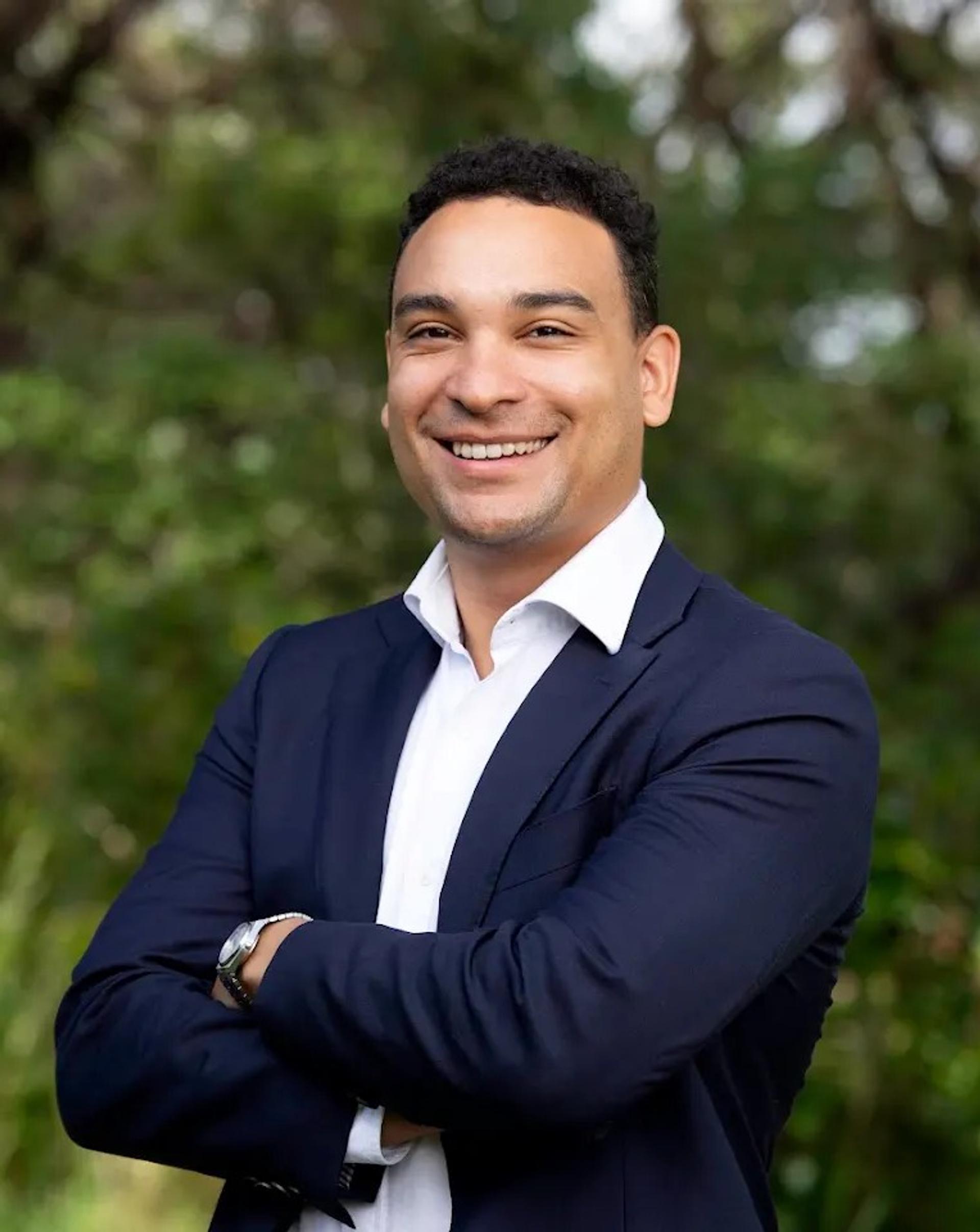
Kumbi Gutsa
Why did you decide to join Cyan Ventures?
What drove me to join Cyan Ventures is the need for urgency in the energy transition. We need to design and deploy new solutions across a spectrum of technologies and industry at pace and scale – and I want to be a part of helping to do that. We are at the point of the energy transition where action is the name of the game and this is exactly where Cyan Ventures plays.
Cyan is mission-focussed. This means we look to advance ‘big bets’ – the solutions that can make material change in the transition to a low carbon, green economy, but are not receiving the attention or investment they need because of challenges such as a lack of understanding, market failures or ambition. I want to spend my time solving these challenges and securing tangible investment flows and project development in the areas it’s needed most.
Tell us a little bit about yourself?
I live in Melbourne but grew up in regional Western Australia and Perth. I studied a Bachelor of Commerce and Masters of Economic Policy at UWA. Outside of my professional life I like to do just that – be outside. A perfect weekend contains some combination of hiking, camping, the beach or in the stands at the footy – cheering on the Bombers of course!
While at Accenture, I spent six years working with and advising some of the largest organisations in the country and the globe, this included:
- Delivering recommendations to the Federal Government for how Australia could seize a $300b+ opportunity by becoming a leader in exporting clean energy materials such as value-added critical minerals, green iron, and parts of the renewable energy supply-chain.
- Collaboration with the World Economic Forum, to convene a coalition of the world’s largest heavy industrials to identify options for shared acceleration on the use of clean power in their hard-to-abate industries.
- Developing sustainability strategies and conducting climate risk assessments to support financial disclosures for leading Aussie corporates.
What is one Big Bet you are personally excited about?
I’m really excited about the potential of Power-to-X (PtX) technology. PtX converts renewable electricity into synthetic fuels, hydrogen, gases, or chemicals, offering harder-to-abate industries an alternative to fossil fuels. It has the potential to be an essential lever in the decarbonisation of industries such as aviation, steel, cement, and shipping.
One benefit I love about PtX is its potential to reduce our overall resource intensity by capitalising on renewable energy that would otherwise go to waste. Think about those times when solar and wind farms overproduce – PtX offers a storage and use solution, turning the spill of renewable into a new energy fuel source.

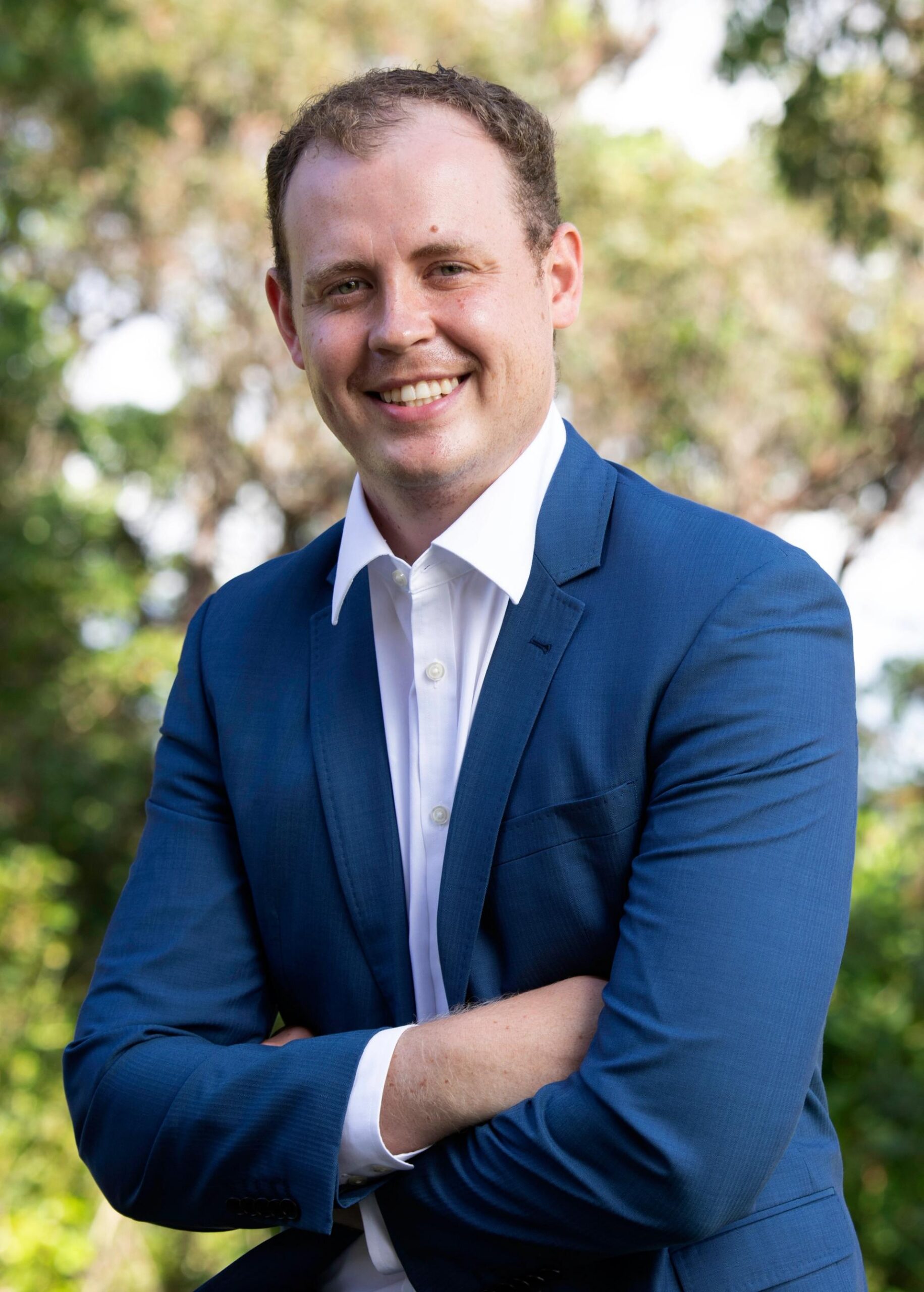
Michael Robinson
Why did you decide to join Cyan Ventures?
From a young age, I was a carer for my sister, who had a severe intellectual disability with a range of other health complications. Despite the challenge of moving to a new city like Adelaide and growing up as a young carer in a city where we had no real family support network, we received amazing support from a range of other networks. As such, part of what has been instilled by my family from a very young age is a sense of giving back to the broader community that supported my journey, looking outwards and always trying to find ways to drive a broader societal impact across what I do in my life.
Cyan’s focus on building the Big Bets to transition to a green economy resonates deeply with me. My goal at Cyan is to support clients and innovators in navigating the challenges that come with transition but also help them build on the opportunities that will come from this such as reducing emissions and generating employment.
Tell us a little bit about yourself?
I live in Sydney but grew up in both regional NSW and Adelaide. I studied a Bachelor of Economics (Advanced) and Bachelor of Finance. In 2020 I obtained first class honours in economics. I love the outdoors and being active. In my spare time you may find me running around the streets of Sydney, at the gym, having a hit of golf, watching footy (AFL and the Adelaide Crows of course!) or even playing footy for the mighty UTS Bats.
While at Accenture, I spent close to three years working with and advising both government and large organisations across the country and the globe, this has included:
- Collaborated with ClimateWorks Centre and ARENA to develop the “Pathways to Industrial Decarbonisation” report for the Australian Industry Energy Transitions Initiative.
- Provided economic and strategic advice to a state government on a local advanced manufacturing industry development plan, delivering recommendations to bolster an industry poised to contribute approximately $10 billion to the state’s economy over the next 10-20 years.
- Supported the creation of a strategic business case for a government-industry venture capital fund, securing $10 million in government funding to assist female-led start-ups.
What is one Big Bet you are personally excited about?
Sustainable Aviation Fuel (SAF) is a Big Bet I am very keen to advance. While electrification shows promise for short-haul flights, for the prevalent long-haul journeys in Australia, SAF appears to be the most viable near-to-mid-term decarbonisation solution.
Cyan’s approach is about unlocking the collaboration new industries need – among government, industry, and ecosystem stakeholders to invest and take significant strides in innovation. I’m looking forward to Cyan’s role as the “connective tissue” to bring together all players across the ecosystem to help catalyse the creation of a SAF industry. Leveraging Australia’s strengths in renewable energy, the creation of a SAF industry can decarbonise a challenging sector.
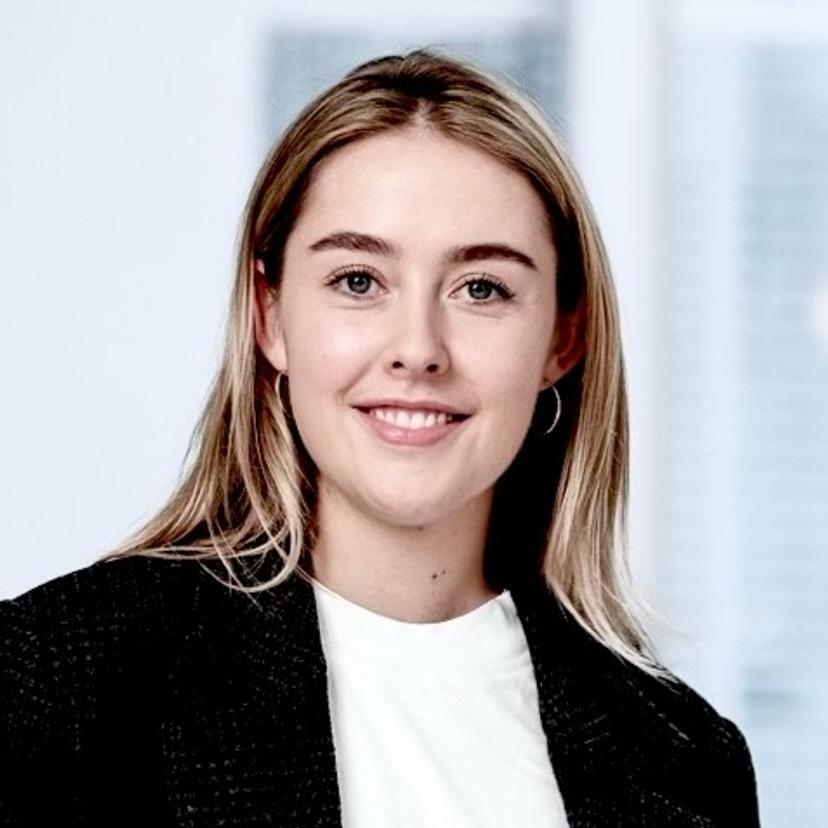
Deirdre Eradus
Why did you decide to join Cyan Ventures?
What attracted me to Cyan was its bold and mission driven approach, focusing on projects and technologies that will accelerate Australia’s transition to a low carbon economy. I was immediately inspired by the ambition of the organisation and the passion of the people in it. There is a strong sense of momentum and purpose at Cyan, and I was excited by the opportunity to help unlock promising technologies and concepts at a pivotal moment for Australia’s energy system.
I am also excited by the chance to apply my strategy consulting experience in an entrepreneurial and execution focused context. Bringing together analysis with business development in the energy transition feels like a natural and exciting next step.
Tell us a little bit about yourself?
I grew up in the Netherlands and have been fascinated by how the physical world works and how we can redesign our energy systems to enable a low carbon future from a young age. This led me to study Applied Earth Sciences before completing a Master of Science in Sustainable Energy Technology at Delft University of Technology.
Before joining Cyan Ventures, I worked at McKinsey & Company in Amsterdam, where I advised clients on emissions reduction pathways and strategic decision making across the energy value chain. Key projects included assessing the techno economic feasibility of biomethane as a feedstock for a global beverage company and analysing Scope 1 emissions reduction pathways for a major industrial client.
In 2025 I moved to Australia, drawn by the adventure, unique wildlife, and proximity to nature. As a true expat, I have landed in Bondi and taken up surfing, which has been both humbling and addictive. Outside of work, I love spending time outdoors through running, hiking, and weekend camping trips.
What is one breakthrough green technology you are personally excited about?
I am very excited about the potential of green iron production in Australia. Green iron involves producing iron using renewable energy and green hydrogen instead of coal, transforming one of the most emissions intensive stages of the steel value chain. Given the significant share of global emissions that comes from traditional iron and steel production, combined with Australia’s abundance of renewable energy resources and iron ore, I believe this shift could have major climate impact.
What makes this especially powerful is that green iron is both a powerful decarbonisation lever and a strategic economic opportunity. Australia is uniquely positioned to move up the value chain, exporting low carbon iron rather than just raw materials.