

Unlocking Australia’s Battery Recycling Opportunity
At the Australian Battery Manufacturing & Recycling Summit, Michael Robinson had the opportunity to share why battery end-of-life systems are no longer a future challenge - they’re a present-day imperative, and one of Australia’s most urgent and investable opportunities in the energy transition.
The Rising Tide of Battery Waste
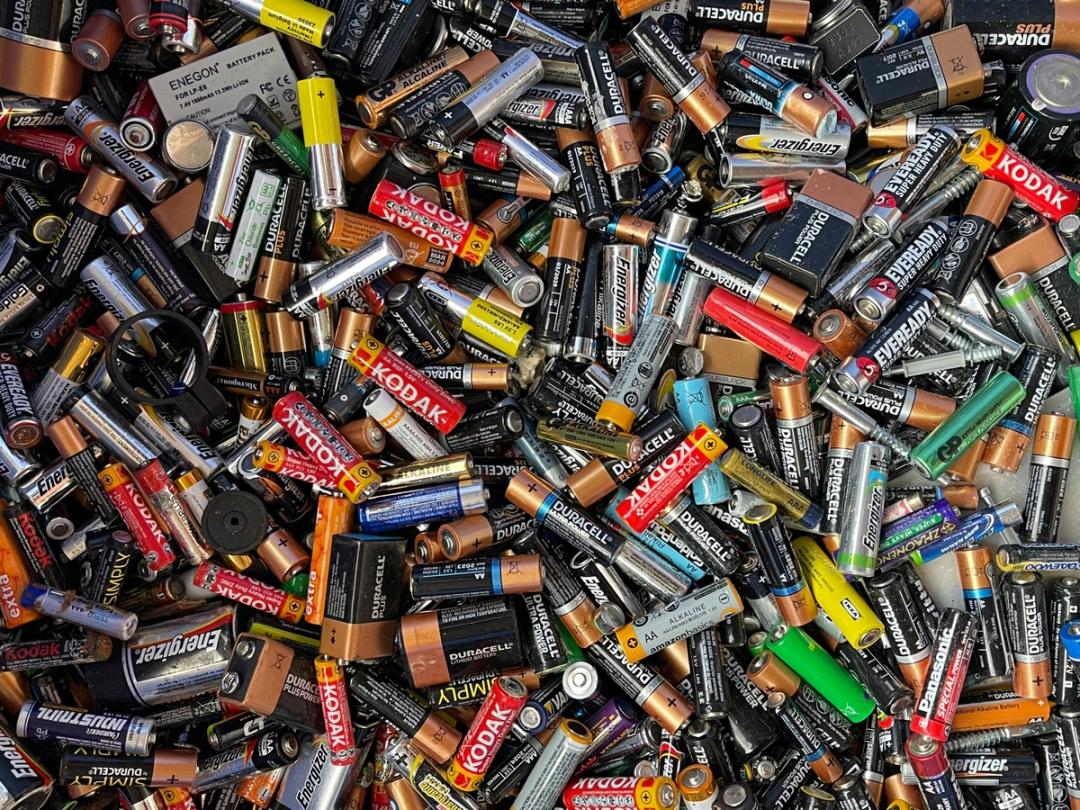
Battery prices have dropped by over 90% globally, accelerating uptake across electric vehicles, household storage, and grid-scale systems. AEMO forecasts more than 400 GWh of cumulative battery demand by 2035, with EVs leading the growth. But alongside this surge comes a fast-approaching wave of battery waste - one that’s arriving sooner and more unevenly than many anticipate.
We’ve seen this story before. When solar PV took off, planning didn’t keep pace - and we’re now dealing with the consequences. Battery waste is likely to follow a similar trajectory, but with greater safety risks. In Australia alone, lithium-ion batteries are responsible for an estimated 10,000–12,000 fires in waste facilities each year. This is not just a recycling challenge - it’s a critical public safety issue.
A Tipping Point - and a Window to Lead
This isn’t just a looming problem. It’s a strategic opportunity for Australia to lead in the next chapter of battery innovation - one focused on circularity, resilience, and value creation. As global markets shift from lowest-cost competition to smarter design and lifecycle performance, we have a chance to position ourselves at the forefront.
To do that, we need to get four things right:
Mandatory Product Stewardship
Voluntary schemes won’t cut it. We need a legislated Extended Producer Responsibility (EPR) framework to eliminate free riders and unlock long-term investment in infrastructure. International experience - from the EU to South Korea - shows that scale and impact only follow when participation is universal.
Smart Commercial Incentives
Circularity must be financially rewarded. Eco-modulated fees, like those used in France and Japan, provide a blueprint - lowering levies for products that are easier to dismantle or recycle. Market mechanisms like value-sharing and long-term offtake contracts can help de-risk recycling projects and support viable business models.
Technology and Safety Readiness
As battery waste becomes more diverse and complex, we need to scale advanced processing, fire-safe logistics, and disassembly automation. The technology exists - in Australia and globally. But deployment won’t happen unless investors see a stable, predictable market signal.
System-Wide Coordination and Infrastructure
Even the best-designed recycling system fails without coordination. We need nationally consistent infrastructure - from drop-off points to regional hubs to contracted processing capacity. A central Producer Responsibility Organisation (PRO) model could help drive this, starting where volumes and economics are strongest, and scaling from there.
The Circular Dividend
This is not just a sustainability issue - it’s an economic one. International modelling shows that circular-ready batteries can reduce recycling costs by 25%, increase material recovery by 75%, and cut lifecycle costs by around 7.5%. Designing for disassembly and recovery may add modest cost upfront, but it pays off through lower operating costs and higher value recovery.
We don’t just avoid waste - we unlock long-term competitiveness.
Where to Next?
Australia has the expertise, the technology, and the industry leadership to build a world-class battery recycling ecosystem. But we need to act now.
With falling costs, surging demand, and a wave of battery waste approaching fast, we have a rare window to shape a smarter, more circular battery industry.
Let’s not wait until the system is overwhelmed. Let’s design for the full lifecycle. Let’s put the right incentives in place. And let’s back the innovators ready to build it.
The moment is here. Let’s not waste it.