

As economist Paul Krugman famously quipped, “Productivity isn’t everything, but, in the long run, it is almost everything.” This is particularly the case in Australia where an ageing workforce, slower birth rates, and tighter immigration is constraining growth in the labour force, which has historically contributed up to two-thirds of Australia’s GDP growth. With demographic tail‑winds fading, lifting productivity growth will have to do far more of the heavy lifting if Australia is to sustain the GDP growth rates to which it has long been accustomed. The good news is that we believe there is one big and overlooked driver of future productivity – the deployment of green capital – which could not only address our environmental concerns, but significantly boost labour productivity and the future prosperity of Australians.
Australia is facing a productivity crisis. Labour productivity growth has slowed to barely one percent per year since 2013 and even fell over the past twelve months. This matters. Without a lift in productivity, real wages stagnate, the budget deteriorates, and our economy becomes less competitive. Treasurer Jim Chalmers is right to call it the definitive economic challenge of this term.
At the heart of the problem is a collapse in private investment. As McKinsey has pointed out, as much as 70 per cent of our productivity decline stems from what they call “Australia’s great private investment drought”.[1] Business investment as a share of GDP has fallen below the levels seen during the 1990s recession. Reversing this would require an additional $130 billion in annual private capital by 2030.
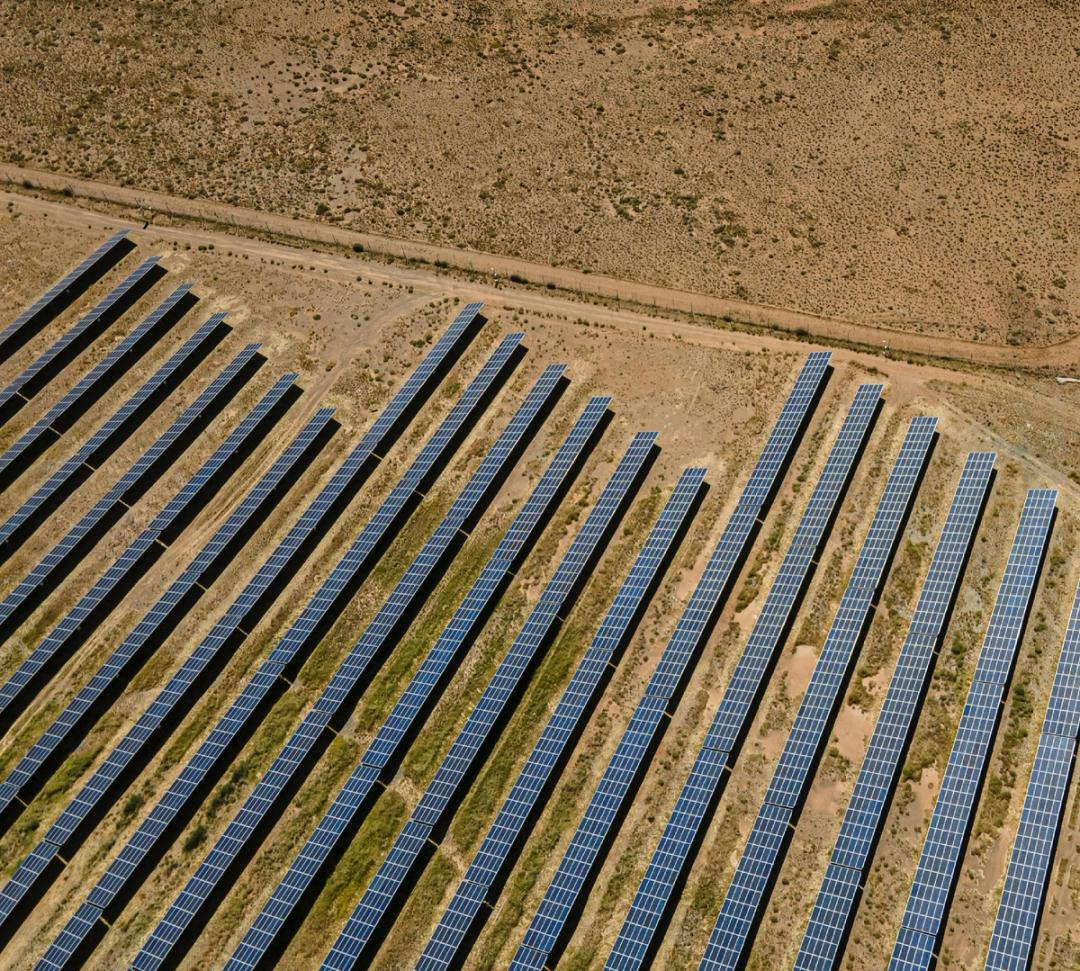
The good news is that we are sitting on a generational opportunity to do just that and, in the process, revive productivity growth. Australia is uniquely positioned to become a global leader in clean energy and clean manufacturing. Our land, solar, and wind resources are among the world’s best, so as our research capability. What we now need is capital to turn these natural advantages into industrial ones.
McKinsey’s estimate of $130 billion in additional annual investment to boost productivity is in line with the Bloomberg’s estimate of the investment required to reach net zero.[2] Our high-level estimates indicate that adding $130 billion in annual investment has the potential to boost productivity by 0.86 percentage points.
Smarter deployment of capital can deliver even more. Targeted efficiency measures, like ARENA’s Solar 30-30-30 program-which aims to reduce the cost of solar electricity by two thirds to below $20/MWh-can significantly increase the returns on new investment.[3] Even capturing a modest 10% capital‑cost saving from streamlined approvals, standard contracts and modular methods would boost productivity growth by 0.09 percentage points.
More investments and smarter investment, together, has the potential to double our current productivity growth rate, enabling us to raise annual income by up to $950 per full-time worker.
Chart: Average annual growth rate in labour productivity (%)

Source: Australian Bureau of Statistics (here), Cyan Ventures analysis. Numbers may not add up due to rounding.
Achieving this level of cost reduction will lower input costs for many downstream industries, freeing up billions in capital for reinvestment elsewhere in the economy.
Much of the productivity discussion to date has focused on tax and regulatory reform – levers for the Australian Government. Our earlier essay, Boardrooms, Not Cabinets, outlined clear actions for the private sector could do to unlock these productivity gains.
- First, go giga scale and go off grid. Australia’s clean-energy future demands giga-scale, off-grid renewable hubs built in new, less congested areas. This can not only simplify regulatory compliance and connection concerns, but it also enables the ability to harness Australia’s best renewable energy resources, with large availability of land.
- Second, automate automate automate. Given that these renewable hubs will be located far from major population centres, Australia needs to exploit every opportunity for automation. Deploying advanced solutions, including automated solar tracking systems and sophisticated remote-monitoring technologies, will significantly improve efficiency and cost-effectiveness in remote locations.
- Third, don’t try to do it all ourselves. Australia cannot-and should not-try to achieve this alone. Securing strategic international partnerships will be vital for accessing large-scale manufacturing capabilities. While domestic innovation in areas like flow batteries and perovskite solar cells is strong, collaboration with manufacturing leaders, especially in countries will dramatically reduce costs and speed up deployment.
- Fourth, create “developer‑as‑a‑service” models. Australia should establish a dedicated “developer-as-a-service” model to rapidly convert innovative, first-of-a-kind projects into commercially viable infrastructure. Inspired by global initiatives such as Rocky Mountain Institute’s Mark1, this platform would provide essential expertise in project finance, community engagement, supply-chain management, and permitting. Such a model would streamline processes, reduce risks for pioneering technologies, and accelerate their deployment across strategic sectors like sustainable aviation fuel and green iron.
Investing in clean energy and clean manufacturing is not just about economic uplift. It accelerates Australia’s transition to net zero, positioning us as a global clean export powerhouse and amplifying our influence in driving decarbonisation worldwide. This means by making these investments today, we not only boost our current productivity but also protect future productivity growth.
This is not abstract economics. As former Treasury Secretary Ken Henry warned earlier this month, “destruction of the natural environment is the biggest threat to future productivity growth”. Climate change and nature loss degrade the very ecosystem services – water, soil, climate stability – that underpin long-term economic performance.
The choice is stark. We can unlock capital to build industries that are more productive, more sustainable, and more export-oriented. Or we can fail to act and lock in another decade of stagnation, real wage declines, and environmental degradation that further drags on growth.
Deploying green capital is no longer just an environmental imperative. It is the clearest, most immediate lever to restore Australia’s productivity and long-term prosperity.
The clock is ticking.
Sources:
[1] McKinsey & Company (July 29, 2025), Five big tests for Australia’s productivity agenda (link here).
[2] Bloomberg’s estimated US$2.4 trillion in investment and spending are required over the period to 2050 for BNEF’s Net Zero Scenario (link here), an equivalent to about A$130-A$150 billion per year.