By Dr. Fraser Thompson, Shaun Chau | Nov 11, 2024
Trump implications for climate
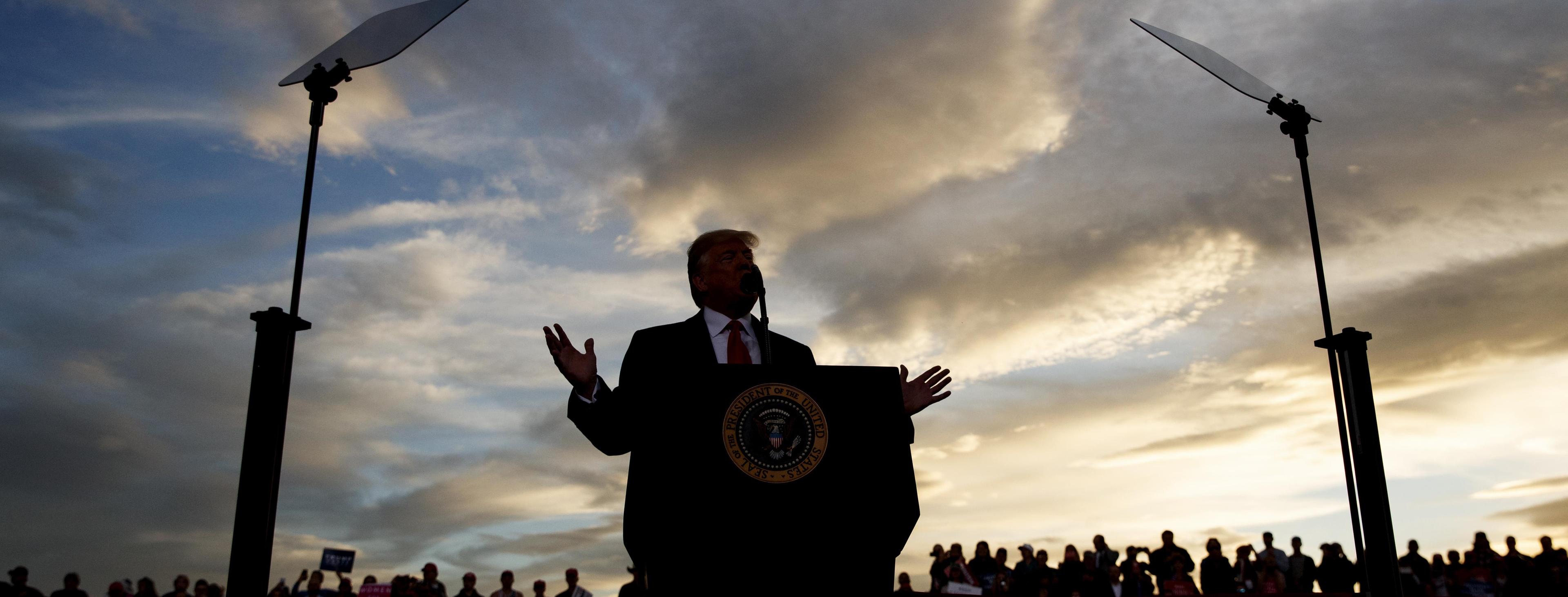
Trump’s second election victory has many in the clean energy sector worried about implications for the net zero transition. While there are reasons for concern, Cyan Ventures’ analysis suggests the reality may be more nuanced. We draw out 3 important “known” implications and 4 other major implications which are difficult to predict.
The three knowns:
- Less cooperation on climate action. During his first term in 2017-2021, Trump – a climate sceptic – rolled back climate regulations and pulled the US out of the Paris Agreement, a move he has promised to repeat. Carbon Brief estimates Trump’s election could lead to an additional 4bn tonnes of carbon dioxide equivalent (GtCO2e) of US emissions by 2030, compared to continuing current-president Joe Biden’s plans (equivalent to the combined annual emissions of the EU and Japan).
- Focus on fossil fuels and nuclear. The Project 2025 conservative manifesto focuses on a “all of the above” approach on energy, which will not discriminate energy choices based on carbon impact, but rather focus more on energy security and cost concerns.
- Geopolitics is here to stay with clean tech supply chains. Increasingly clean tech markets have been split by geopolitics. Concerns have been raised in the US and elsewhere with China controlling more than 90% of the global supply of solar and other critical renewable energy supply chains. Geopolitical concerns have seen significant investments in localised production with large price differentials across markets (e.g., up to 4x differences in prices between China and the US in some areas of the solar supply chain). Trump has threatened to impose 60% tariffs on U.S. imports of Chinese goods, which is much higher than the 7.5%-25% levied on China during his first term, so expect these geopolitical battles to remain (and possibly strengthen).
The four unknowns:
- China’s continued climate leadership. A US-China trade war could have much larger concerns for China than it did in Trump’s first term in office, given the country’s mountain of debt, a weak property sector, and anaemic domestic consumption. Given China has been the powerhouse of global decarbonisation, both domestically (fossil fuels now make up less than half of China’s total installed generation capacity, versus two-thirds a decade ago) and internationally (particularly through its technology and cost leadership on everything from batteries through to solar panels), a trade war with the US which impacts the economy domestically, could have unforeseeable impacts on the country’s continued focus on the clean energy transition.
- Support for green technologies domestically. While the Project 2025 manifesto talks about unwinding “extreme green policies”, including much of Biden’s Inflation Reduction Act (IRA) for green tech in the US, and Trump himself vowed to rescind unspent IRA funds and end EV tax credits, the IRA may not be dead. An estimated two-thirds of IRA-funded clean energy projects are in Republican-leaning states (e.g., Texas, Georgia, Tennessee) and so much of the IRA manufacturing support may remain intact especially if it can be re-badged under a domestic manufacturing initiative. US States and also corporations may also pick up more of the slack in any case (as they did in Trump’s first term)
- Interest rates. The prospect of tariff increases and lower taxes could fuel inflation, and interest rates, with important knock-on effects for clean energy. Higher interest rates penalize clean energy projects, particularly renewable energy installations like solar and wind, which have low operating costs but high upfront capital expenditures. They are also detrimental for newer technologies such as green hydrogen, carbon capture, and storage, or long-duration energy storage by making it harder for these projects to secure funding, as investors are less willing to finance higher-risk, capital-intensive projects without strong returns. But Trump’s broader economic policies could also lead to reductions in interest rates, which would have opposite effects.
- Global conflict and its impact on clean energy. President Trump has said that he could end the Russian invasion of Ukraine in one day. In general, the prospects are for a more isolationist US policy. The impact of this on global conflict is less clear as are the implications for the clean energy transition. Russia’s invasion of Ukraine led to a ramp up of fossil fuels to provide domestic energy security (e.g., switching from Russian gas to local coal), but also set the stage for important increases in investment in localised production for clean tech products and increases in renewable energy investment (the EU, for instance, fast-tracked its Green Deal and REPowerEU plan). Isolationalist foreign policy could see more renewable energy built for resilience reasons at higher overall costs.
Image source: Carolyn Kaster / AP
Author
- Dr. Fraser Thompson
- Shaun Chau
Get in touch!
Need a problem solved? Let`s work together to solve it
Contact UsShare with