By Shaun Chau, Michael Robinson | Dec 2, 2025
Australia's untapped energy opportunity: Virtual Power Plants
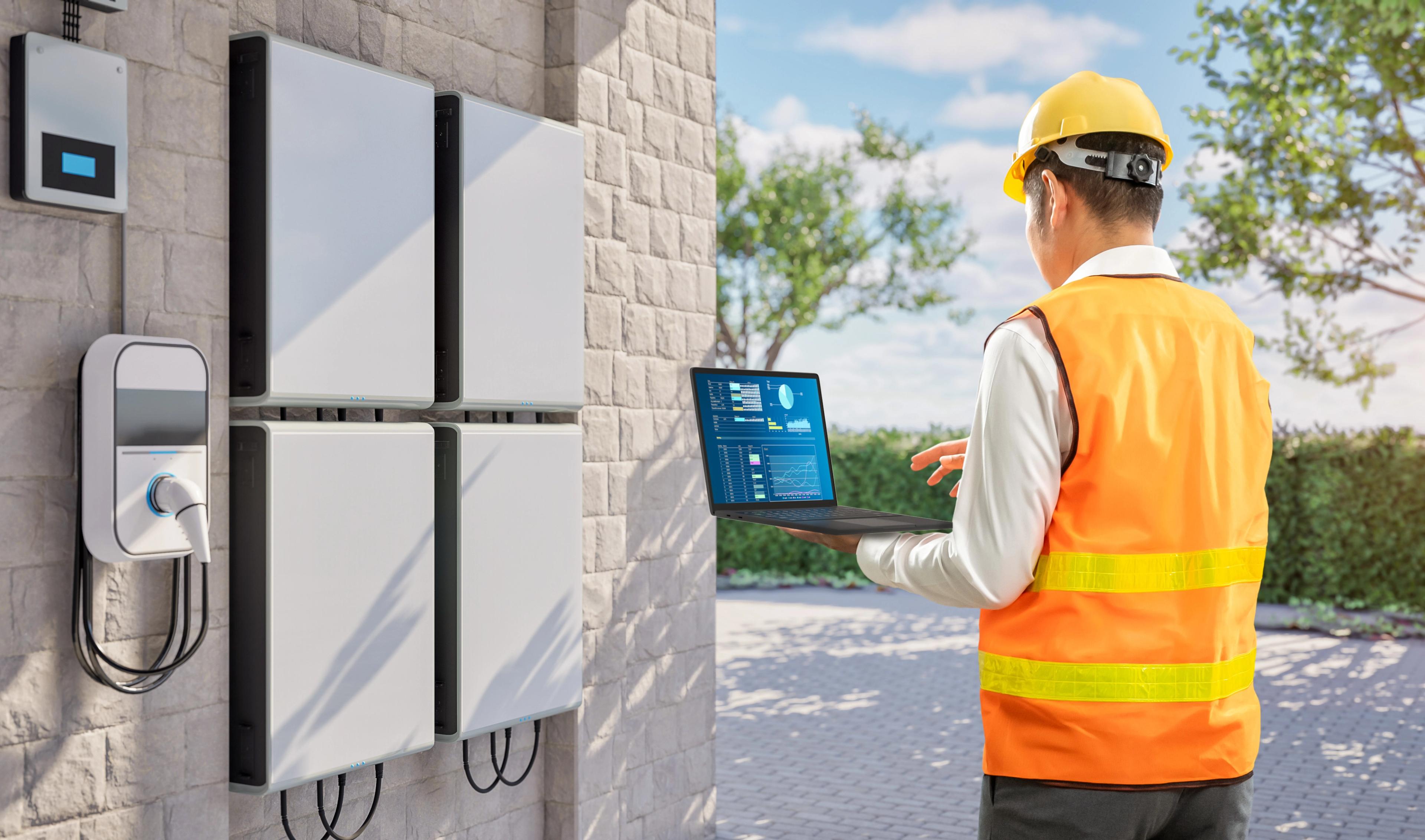
Australia is sitting on a multi-billion-dollar clean energy asset, and barely using it.
Not some future mega-project. Not more poles and wires. The tech is already on roofs and in garages – it’s the home solar and batteries that we should be turning into a flexible, low-cost grid resource or what are called Virtual Power Plants or VPPs for short. Get it right and the savings are estimated in the billions of dollars (collectively and by household).
Australia is already a quiet renewables superpower and we're missing a critical opportunity.
Already ahead
Australia leads the world in rooftop solar and "behind-the-meter" tech. Around a third of Australian homes now have rooftop solar – roughly three to four times the rate of many other advanced economies and with recent battery developments are ahead of most countries in terms of battery installations.
As a result, Australia is experimenting with the aggregation of these new distributed energy systems earlier than any of our peers. We are hitting technical and regulatory limits earlier than almost anyone else, which has forced the development of a sophisticated ecosystem of firms who can actually orchestrate these assets in the wild—not just in pilots.
What is a Virtual Power Plant?
Virtual Power Plants link small energy devices like home solar, batteries, EV chargers and smart appliances so they act together like a single big power station. Software connects to these devices, turns them up or down in response to grid signals, and gets them to charge, discharge or shift when it's most valuable. That coordination keeps the grid stable, reduces the need for expensive infrastructure, and creates value that gets shared back with participating households.
Done right, VPPs cut bills, improve resilience, and help avoid billions in network upgrades. Why build a big new solar and battery project when they are already installed? The value is real. AEMO modelling suggests that active orchestration of distributed energy resources, especially consumer batteries, could avoid up to $4.1 billion of network and grid scale investment over coming decades.[1] So why aren't VPPs everywhere?
The problem isn't technical
The biggest barrier isn't the technology. Most households still see energy as "just a bill" and have never heard of VPPs. And honestly? "Virtual Power Plant" is an appalling name invented by energy engineers. It doesn't explain what it does, and even when people have heard of it, they're confused.
Consumers don't know what's on offer. Households with larger batteries that allow wholesale trading and grid services are often earning >$2,000 a year.[2] With the generous federal and state rebates, batteries should pay back within four to five years. Almost nobody knows this.
Where awareness exists, trust is the next hurdle. Trust in energy providers is fragile. People are sceptical that promised savings will materialise, and handing over control of their battery feels risky. When people don't clearly understand how a VPP works for them, the default is simple, do nothing.
Case in point, NSW Government offers a $1,500 rebate to battery owners for joining a VPP. Take-up rate? Five percent.[3]
Then there's the technical reality. Even when customers want to join, their device often can’t or is limited in its performance on a VPP. Different inverters and batteries speak different languages. Data is shallow and there is limited visibility of state of charge or battery health. Many programs only tap wholesale arbitrage rather than higher-value services like FCAS or local network support.
Figure 1: VPPs today capture only a share of the available value with a 50-60% uplift possible
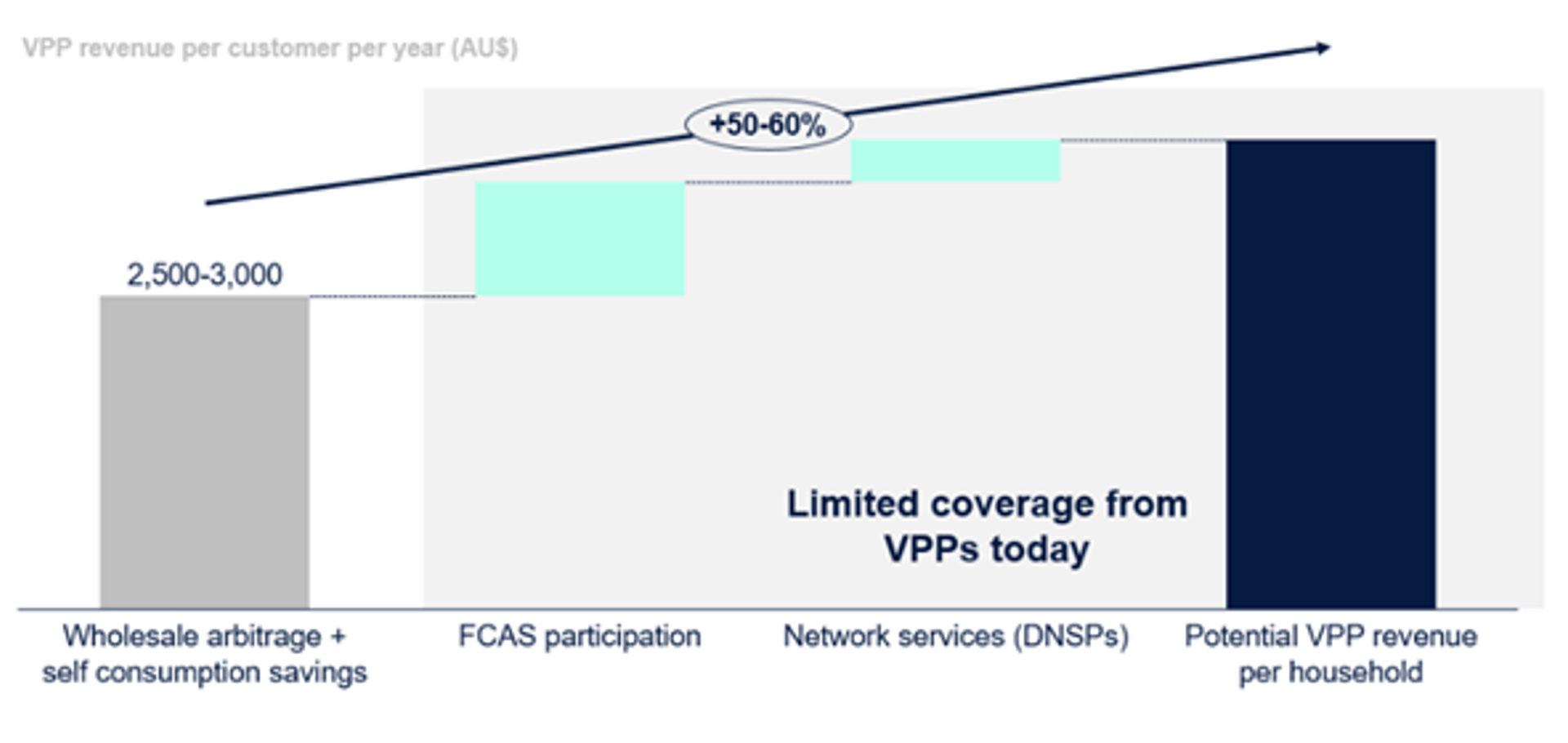
The gap between what VPPs could earn for customers and what they actually deliver is huge. Offers are thin, participation is low, and the market struggles to scale.
What needs to happen
VPPs need to be designed for people first, not systems first.
Make the value obvious. Ditch the jargon. Explain how a battery, tariff or VPP saves money and supports the local grid in plain language. Better framing might help: "community power programme" instead of "Virtual Power Plant", or "battery feed-in tariff" rather than "energy market trading". Give households simple tools to see what participation means for their bill, in their area. Publish real performance outcomes, bill impacts, cycling patterns, local benefits, not just modelled results. Show people in black and white what it will do for them.
Build trust through transparency. Create a public, independent review platform, similar to Choice or Canstar, where households can compare VPP offers, see ratings and testimonials, and check performance. Publish independent quality assessments of installers, hardware brands and VPP operators. Apply consistent standards for remote control, minimum service levels and data access. Spell out clear rights if a VPP fails to deliver or if control actions cause harm. Have similar provisions around data privacy. Require honest product claims: realistic earnings ranges, cycling expectations, and battery health impacts.
Open up the pipes and the markets. Invest in simple, brand-agnostic communication pathways so most batteries can join the VPP of their choice. Lift reliability with deeper asset visibility, accurate state of charge, cycling behaviour, and health data, so VPPs can play with confidence in FCAS and network support markets. Use tools like flexible exports to raise household yield where the network can support it, and channel those gains into stronger customer payments. As interoperability improves and more value streams open up, participation becomes the default.
Here in lies the opportunity
Australia has already done the hard work of building a world-class distributed energy resource base. The next move isn't another pilot or another report. It's redesigning VPPs so millions of households actually want to join them.
Turn the technical lead into mass participation, and VPPs stop being a niche innovation story. They become one of Australia's defining competitive advantages in the clean energy era.
Sources
- Shaun Chau
- Michael Robinson
Need a problem solved? Let`s work together to solve it
Contact UsShare with